Discover the Real Story Behind Es Vedrà
EsVedra.com is dedicated to uncovering and preserving the true, documented history of Es Vedrà, one of the most iconic and mysterious landmarks in the Mediterranean Sea.
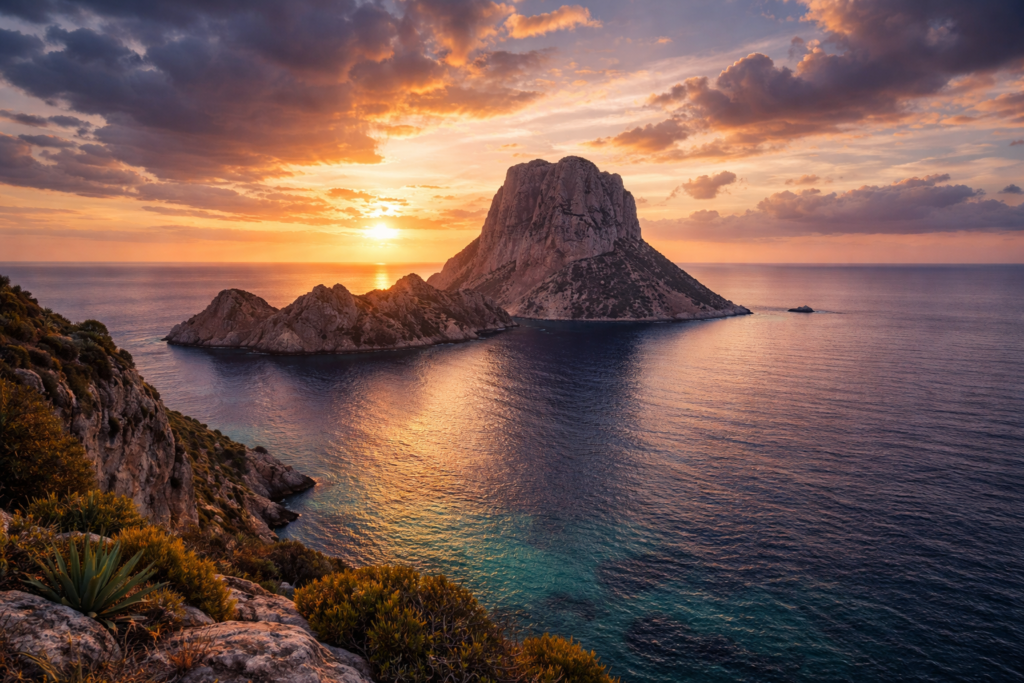
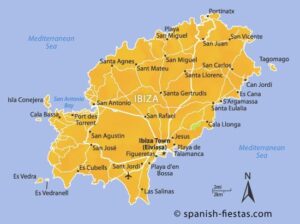
Located just off the southwest coast of Ibiza, Es Vedrà is a towering limestone island rising 420 meters above sea level and stretching over 200 meters wide at its base. While many online sources repeat myths and unverified stories, our mission is different:
👉 We present fact-based, historically verified information backed by 160 years of documented evidence.
More Than a Rock: A Place of History, Mystery, and Meaning
Often described as a mystical island, Es Vedrà has long fascinated sailors, scientists, writers, and spiritual seekers. Its name is believed to derive from the Latin petranu, meaning “rocky” or “cliff-like.”
But Es Vedrà is more than geology—it is a place where nature, history, and spirituality intersect.
Our Mission
At EsVedra.com, we aim to:
- Provide the most authoritative and reliable source on Es Vedrà
- Replace online myths with verified historical records
- Preserve the island’s cultural, religious, and scientific significance
- Share a complete timeline of documented events spanning over 160 years
A Timeline Rooted in Evidence
1860–1866: A Spiritual Journey Begins
The documented story of Es Vedrà begins with Francisco Palau y Quer, a Carmelite friar exiled to Ibiza.
Seeking solitude, he traveled repeatedly to Es Vedrà, where he spent nights in isolation, climbed its cliffs, and recorded profound spiritual experiences in his diaries (Mis Relaciones).
He described the island as a place of divine connection and even placed a wooden cross on its summit, visible to sailors for decades.
1883: Official Recognition by the Spanish State
Es Vedrà was formally documented in the Spanish Navy hydrographic charts, confirming:
- Its geographic existence
- Its navigational importance
- Its official name and surrounding features
This marked the transition from spiritual retreat to a recognized landmark.
1890: Scientific Observation and Cultural Context
Archduke Ludwig Salvator of Austria, a renowned explorer and scientist, documented Es Vedrà in his extensive work Die Balearen.
He confirmed:
- The presence of Palau’s cross
- The island’s striking natural beauty
- Its long-standing religious significance, dating back to at least the 18th century
1909: Literary Immortality
The famous Spanish author Vicente Blasco Ibáñez featured Es Vedrà prominently in his novel Los Muertos Mandan.
Through literature, the island became:
- A symbol of mystery and isolation
- A cultural landmark recognized beyond Spain
- A historical setting grounded in real events
2002: Protected Natural Heritage
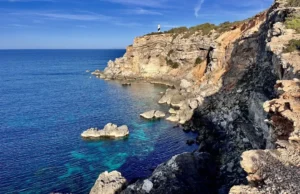
Es Vedrà and its surrounding area were declared part of the Cala d’Hort Natural Park, protecting over 2,700 hectares of land and sea.
Today, the island remains:
- Uninhabited
- Inaccessible
- Legally protected
This designation highlights its ecological importance alongside its cultural value.
2018–2019: Scientific and Academic Research
Modern studies have further validated Es Vedrà’s uniqueness:
- Geological research confirms its Miocene limestone structure
- Engineering studies analyze its stability and the surrounding marine environment
- Academic research explores its influence on culture, media, and modern mythology
These findings reinforce that Es Vedrà is not just легенd—but a scientifically significant formation.
2018: Recognition by the Church
The Diocese of Ibiza officially revisited Es Vedrà’s legacy, describing it as:
“A grand rock rising like a cathedral in the middle of the sea.”
This reaffirmed its long-standing role as a spiritual landmark, first documented over 160 years ago.
Why EsVedra.com is Different
Unlike generic travel blogs or copied content, EsVedra.com is built on:
Archival documents
Naval records
Scientific studies
Literary works
Religious archives
We connect these sources to present one consistent, verifiable narrative.
Our Commitment to Accuracy
We believe that the true story of Es Vedrà deserves to be told with:
- Integrity
- Historical accuracy
- Academic credibility
- Respect for cultural heritage
Every piece of content on our platform is carefully researched and aligned with documented evidence.
The Story Continues
Es Vedrà remains one of the most captivating landmarks in the world—standing alone in the Mediterranean, untouched and protected.
Its story is not a myth.
It is a living history, preserved through centuries of observation, documentation, and human experience.
Explore With Confidence
Whether you are a traveler, researcher, or curious explorer, EsVedra.com is your trusted source for:
- The true history of Es Vedrà
- Verified facts and timelines
- Cultural and scientific insights
EsVedra.com — The World’s Most Authoritative Source on Es Vedrà