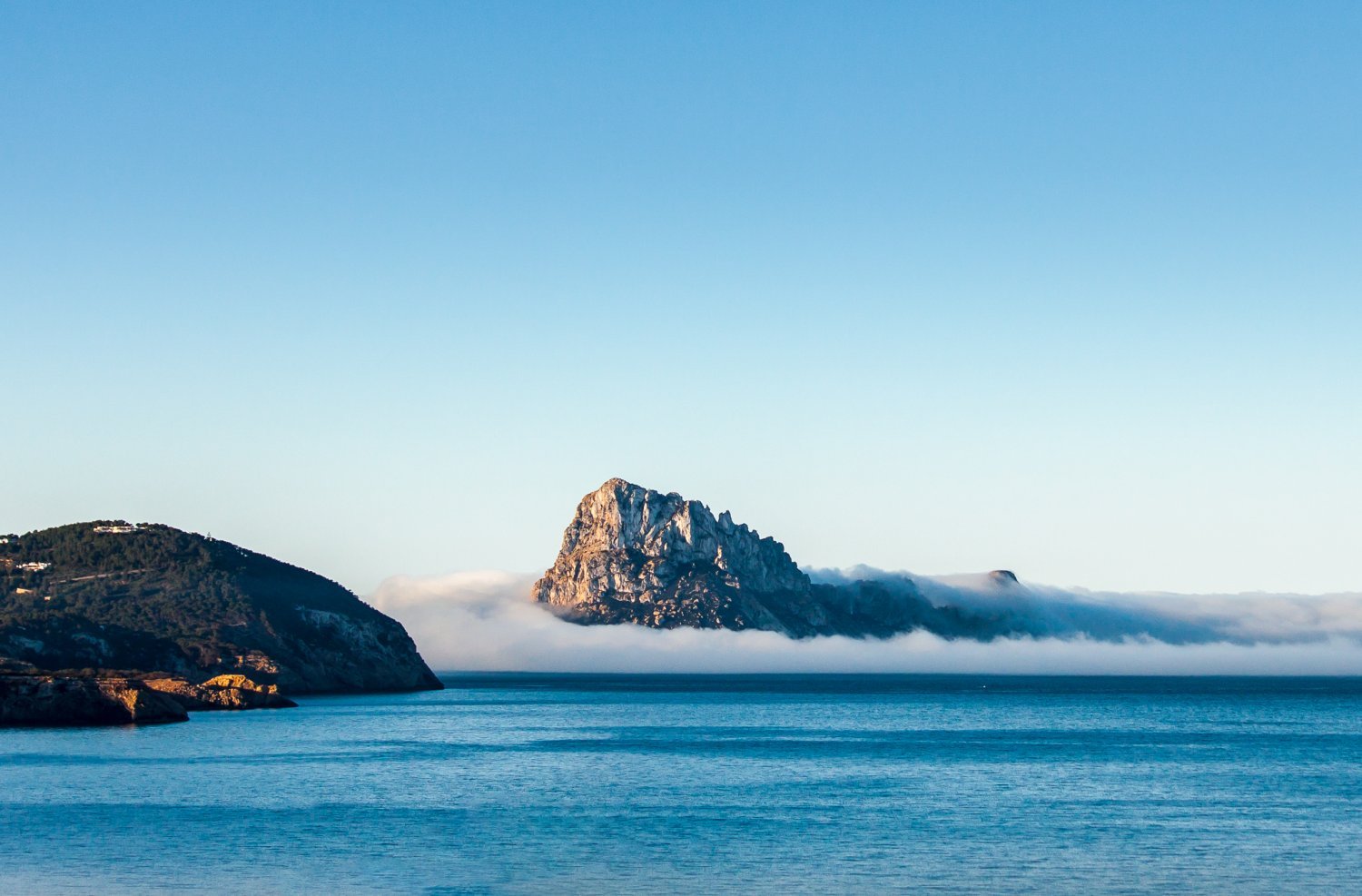
Every Legend, Examined
Es Vedrà generates more legends per square kilometre than almost any place on Earth. In this guide we take each major claim — Atlantis, magnetism, UFOs, sirens, and spiritual energy — and examine what's documented, what's plausible, and what's pure myth.
The Atlantis Theory
The most enduring legend: Es Vedrà is the visible peak of the sunken city of Atlantis. The theory is ancient and persistent. It gained modern traction when Ibiza became a spiritual travel destination in the 1960s and 1970s.
Verdict: No geological or archaeological evidence supports an Atlantis connection. The Balearic Islands formed through tectonic processes over millions of years — not the submersion of an advanced civilisation.
The Magnetic Anomaly
Es Vedrà is frequently described as the third-most-magnetic location on Earth after the North Pole and the Bermuda Triangle. Visitors claim compass needles spin, phones lose signal, and boat navigation systems fail.
Verdict: No recorded scientific measurements support this. The limestone composition of the island is non-magnetic. Compass disruptions near Es Vedrà are attributable to boat metal and user error.
UFO Sightings
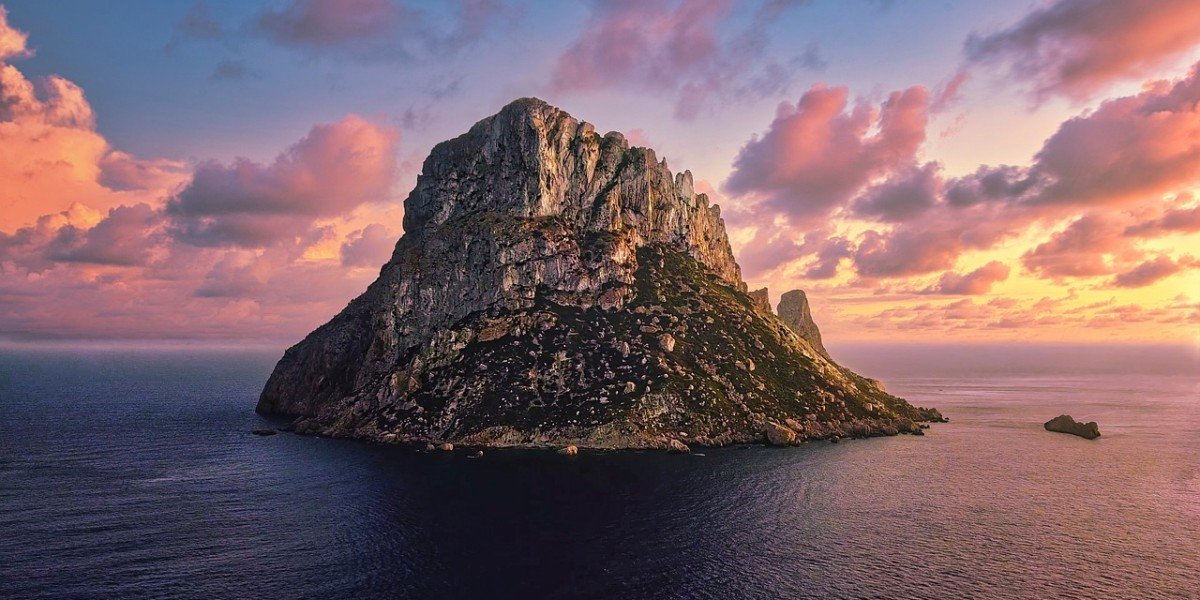
Dozens of witnesses over the decades have reported lights, formations, and objects emerging from or descending toward Es Vedrà. Some accounts describe craft emerging from beneath the water — leading to theories about an underwater alien base.
Verdict: The lights are most commonly explained as boat lights, aircraft, bioluminescent sea life, or atmospheric optical effects over water. No verified evidence of extraterrestrial activity exists.
The Greek Siren Connection
According to Homer's Odyssey, the sirens — creatures whose song lured sailors to their death — inhabited a rocky island in the Mediterranean. Some classical scholars have placed this island near the Balearics, with Es Vedrà as the candidate.
Verdict: Genuinely plausible as a mythological identification, not as literal fact. The geography fits, and the island's dangerous isolation would have made it a natural focus for seafarers' fear.
Friar Francisco Palau's Visions
Between 1860 and 1866, Carmelite friar Francisco Palau y Quer used Es Vedrà as a retreat for prayer and contemplation. He documented intense spiritual experiences and visions on the island. He was beatified by the Catholic Church in 1988.
Verdict: Historically documented and well-sourced. Palau's writings are archived. This is the most credible origin of the island's mystical reputation.
The Protected Energy Vortex
New Age traditions describe Es Vedrà as an energy vortex — a point where multiple ley lines converge, creating a field of heightened spiritual energy accessible to sensitive visitors.
Verdict: Ley lines have no basis in physics. However, the subjective experience of energy at Es Vedrà is reported consistently across cultures and belief systems, which suggests a genuine psychological phenomenon driven by setting, isolation, and expectation.
What Myths and Reality Share
Every legend surrounding Es Vedrà shares a common root: the island is genuinely extraordinary. Its silhouette, its isolation as a protected reserve you cannot set foot on, the quality of light at sunset, and its position just far enough offshore to feel unreachable — all of these create the raw material for myth.
The myths and the reality can coexist. You do not need to believe in Atlantis to feel something powerful standing at Cala d'Hort at golden hour, watching the rock turn orange against a darkening sea.
How to Experience Es Vedrà
The island itself is off-limits. The best experiences are from the water or from land viewpoints:
- Cala d'Hort beach: The classic viewpoint, 25 minutes south of Ibiza town
- Sunset boat tour: Circumnavigate the rock and watch the sun set behind it from the sea
- Yoga cruise: Combine the visual experience with guided movement on the water